
People
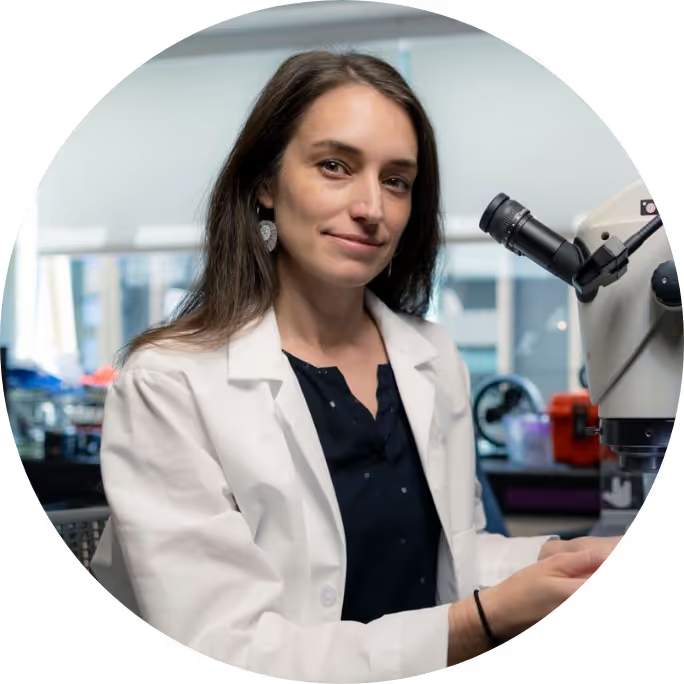
Lauren A. O’Connell
Associate Professor of Biology
Department of Biology
Wu Tsai Institute for Neuroscience
Sarafan Chem-H
Principal Investigator at Stanford University

Graduate Students
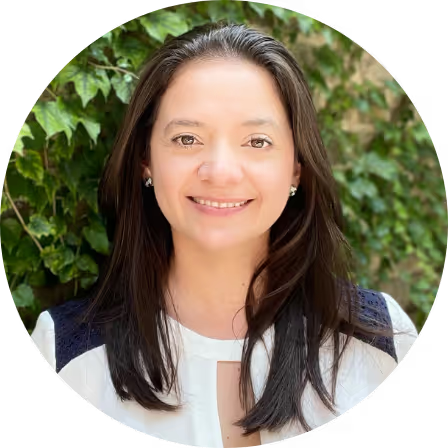
Amanda Muñoz Meneses
PhD Student
Amanda Muñoz Meneses
PhD Student
Amanda is a Colombian biologist broadly interested in disease ecology and conservation, particularly chytridiomycosis, a disease caused by a fungus decimating amphibians globally - Batrachochytrium dendrobatidis (Bd). Her research explores host-pathogen interactions in poison frogs, focusing on how their microbiome and unique skin chemistry influence susceptibility to Bd infection. Previously, Amanda conducted research in amphibian conservation, sexual selection, bioacoustics, and behavior. Outside of lab Amanda enjoys spending time with her family and friends, traveling and working on her family business.


Cesar Mena
PhD Student
Cesar Mena
PhD Student
I am interested in studying the mechanisms behind chemical defense in poison frogs. Through my research, I hope to uncover key proteins involved in alkaloid sequestration across different developmental stages in these frogs. Additionally, I aim to describe various behavioral mechanisms in both tadpoles and adults that are important for maintaining their chemical defenses. Outside of the lab, I enjoy hiking, watching movies, and playing video games!

Ian Shriner
PhD Student
Ian Shriner
PhD Student
Ian is a PhD student fascinated by behavioral and physiological adaptations in animals. Specifically, he is interested in understanding how species produce, transport, and store specialized molecules, such as poison frogs’ alkaloid toxins. For his dissertation, he will be studying the molecular mechanisms that facilitate sequestration and autoresistence in poison frog species. Previously, Ian worked as a wildlife biologist and national park ranger. When not in the lab, Ian enjoys spending time outdoors, doting on his dog, and attempting to garden.
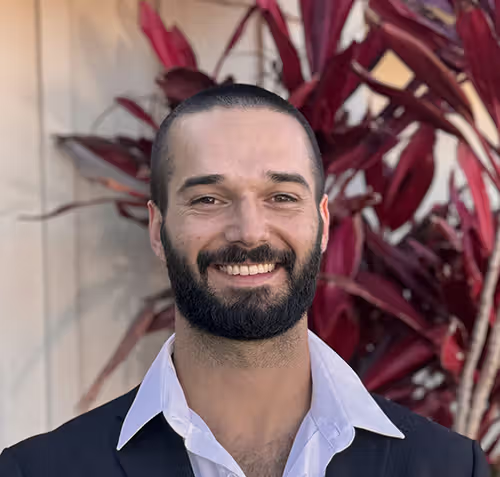
Max Madrzyk
PhD Student
Max Madrzyk
PhD Student
Max studies how species respond to alarming olfactory stimuli both through their behavioral and neurobiological responses. Specifically, he is interested in how life history and developmental experience shapes this response. He will be characterizing the brain regions and neurotransmitters that regulate alarm response as well as the mechanisms in the olfactory bulb that detect and integrate olfactory stimuli. In his free time, Max likes to rock climb, snowboard, and travel.

Mila Pamplona Barbosa
PhD Student
Mila Pamplona Barbosa
PhD Student
Mila is interested in circadian rhythms and how they influence animal behavior, physiology, and ecology. Science communication and advocacy for diversity, equality, and inclusion in science are some of her passions! She believes science and education are essential tools to fight social inequality. In her podcast in Portuguese called Charlando, she talks about science, daily life, and academia, using a bit of comedy to make science more accessible to the broad public. Her hobbies include playing the drums and the ukulele, playing with her cats, and, as a good Brazilian, dancing!
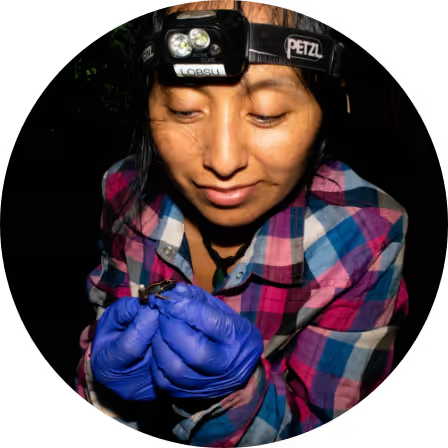
Shirley Jennifer Serrano Rojas
PhD Student
Shirley Jennifer Serrano Rojas
PhD Student
I am a Peruvian field biologist passionate about animal behavior and biodiversity conservation in the tropics. I am broadly interested in understanding the evolutionary consequences of climate change and anthropogenic disturbances on species’ reproductive success. Using poison frogs as my model species, I aim to study the mechanisms underlying the diversification of reproductive strategies and how these evolutionary adaptations will respond to rapidly changing environments. With my studies, I am hoping to gather information that can be used to guide amphibians’ conservation efforts.I also love music, dancing salsa and bachata, watching scary movies, climbing trees and exploring new places.
Postdoctoral Researchers
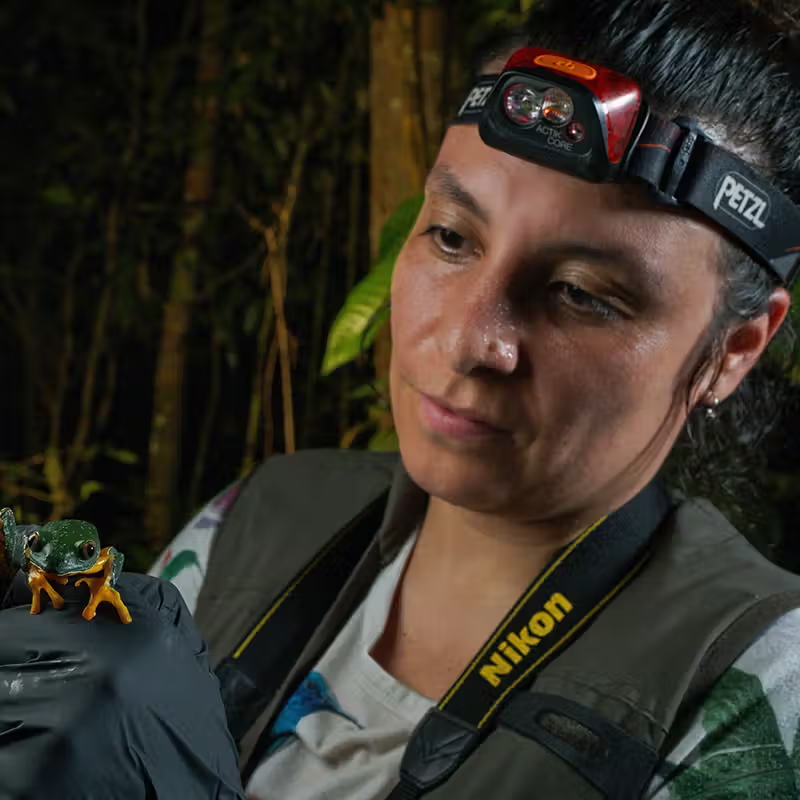
Daniela Pareja Mejía, PhD
Postdoctoral Scholar
Daniela Pareja Mejía, PhD
Postdoctoral Scholar
Daniela is a behavioral ecologist studying how movement, personality, and environmental variation shape the spatial ecology of Neotropical frogs and how frogs sense and respond to environmental change. She completed her Master’s and PhD at the State University of Santa Cruz (UESC) in Brazil, developing new methods for tracking arboreal frogs and advancing the understanding of Amazonian treefrog behavior and spatial ecology. In her postdoctoral project, she investigates how poison frogs detect and respond to heat by identifying warm-sensing neurons and examining how neural and behavioral plasticity shift across environmental gradients. Her work seeks to uncover mechanisms that shape thermal resilience in amphibians facing climate change. Beyond research, she advocates for gender equity in STEM through networks in Brazil and Ecuador, and she founded SAVE THE FROGS ECUADOR and the Herpeto Behavioral and Spatial Ecology Group. In her free time, she enjoys traveling, collecting vinyls, and craft beer tasting.

Monique Pedroza, PhD
Postdoctoral Scholar
Monique Pedroza, PhD
Postdoctoral Scholar
Monique is a non-binary, Latine scientist from Miami. Broadly, Monique is curious about the intersection of ecology, evolution, and developmental biology. Specifically, they aim to explore how changing environmental conditions such as temperature and microplastics impact fundamental tissue morphogenesis and downstream behavioral consequences in frog embryos and tadpoles. During their PhD, Monique pioneered a novel, 3D model of the human embryo using stem cells to understand signaling and differentiation dynamics in the early embryonic development.
Beyond research, Monique is curious about pedagogy, soccer, volleyball, shapes, asymmetry, art, and patterned landscapes.
Undergraduates
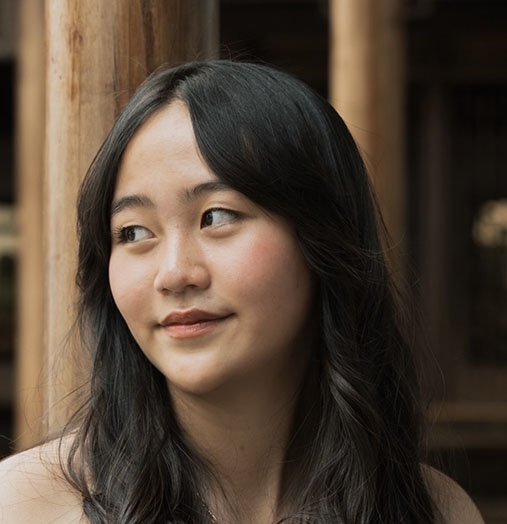
Emma Mei Lan Luu
Undergraduate Researcher
Emma Mei Lan Luu
Undergraduate Researcher
Hi, I'm Emma! I’m a freshman at Stanford University, exploring pre-med (particularly pediatrics), philosophy, and art history. My work in the lab focuses on amphibious circadian rhythm systems, comparing tree frogs and glass frogs to better understand the biological mechanisms underlying their rhythms. Outside of the lab, I love reading, making art, and visiting museums. I’m also a huge animal lover, and you can often find me cuddling with animals in my free time!
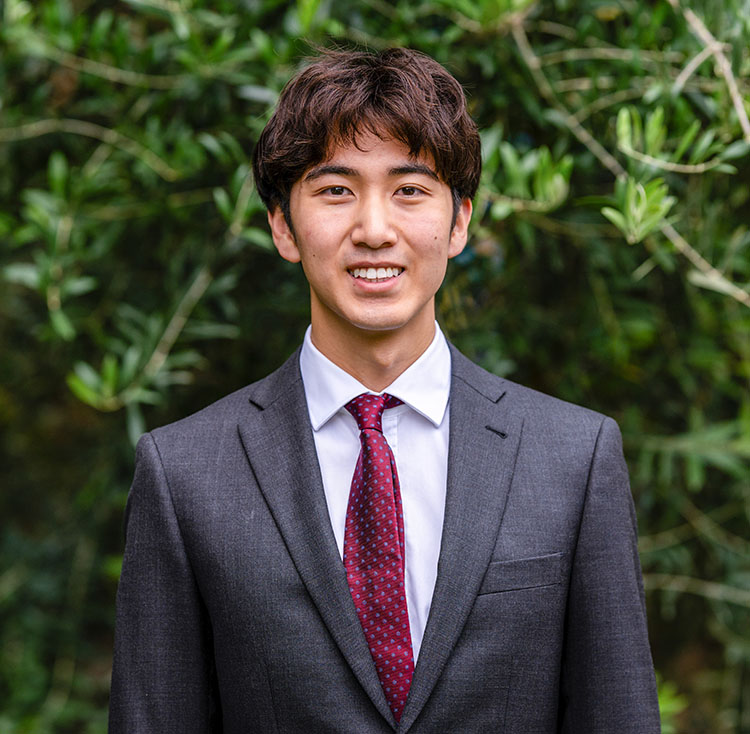
Lucas Lin
Undergraduate Researcher
Lucas Lin
Undergraduate Researcher
I am a sophomore undergraduate researcher majoring in Computer Science with a focus in Computational Biology. My project in the lab focuses on the neural origins of alarm responses in poison dart frog tadpoles across various species. Through my research, I hope to identify which specific genes and brain regions drive different alarm responses exhibited by gregarious and cannibalistic tadpoles. Outside of research, I enjoy playing basketball and fishing!

Natalie Bai
Undergraduate Student
Natalie Bai
Undergraduate Student
Hi, this is Natalie! I’m a rising senior majoring in Cellular, Molecular and Organismal Biology. My work in the lab focuses on the genetic and neurological basis of the amphibious circadian rhythm system. Using glass frogs as my model organism, I aim to examine the periodical expression of encephalic clock genes, and how this information correlates with their daily activity. In my free time I enjoy drawing and reading mystery&detective fictions. A recent favorite is The Thursday Murder Club.

Seiya Tu
Undergraduate Researcher
Seiya Tu
Undergraduate Researcher
Seiya is a sophomore majoring in Human Biology. She is excited to explore the amphibious circadian rhythm system and to understand the biological basis of behavior. Seiya is equally interested in broadening the accessibility of scientific literature to the youth through classes and toolkits. In her free time Seiya loves baking, reading classics, venturing outdoors, and always listening to music.
Research Technicians & Data Scientists

Ashok Zachary Reddy
Research Professional
Ashok Zachary Reddy
Research Professional
Zach works on synchronized parental care, neuroethology, and neural organization in imitator frogs while supporting lab operations. He is interested in understanding how molecular processes in the brain give rise to behavior and how they may be manipulated with chemical and genetic tools.He hails from rural Kansas and loves spending time outdoors, long distance running, and attempting to teach himself how to play the guitar.

Camilo Rodríguez, PhD.
Data Analyst and Bioinformatician
Camilo Rodríguez, PhD.
Data Analyst and Bioinformatician
I am a behavioral ecologist interested in animal behaviour, endocrinology, herps and data science. My research focuses in understanding the neuroendocrine mechanisms behind the evolution of aggressive behaviour in poison frogs. In the O’Connell lab I focus on using computational tools to address diverse biological questions.

Dave Ramirez Rodriguez
Lab Manager
Dave Ramirez Rodriguez
Lab Manager
Dave is the lab manager for the O'Connell lab. He studies toxin metabolism in poison frogs. In his free time, he enjoys hanging with friends, playing video games and going to concerts.
Leigh Henderson
Project Scientist
Leigh Henderson
Project Scientist
In lab, Leigh is asking the question: how do poison frogs become poisonous? She focuses on genes that may transport or metabolize toxins. This fits nicely with her background in genetics, metabolism, and bioinformatics.Outside the lab, Leigh likes to explore local parks and trails, learn about nature native to the San Francisco Bay area, volunteer, read, and play games.
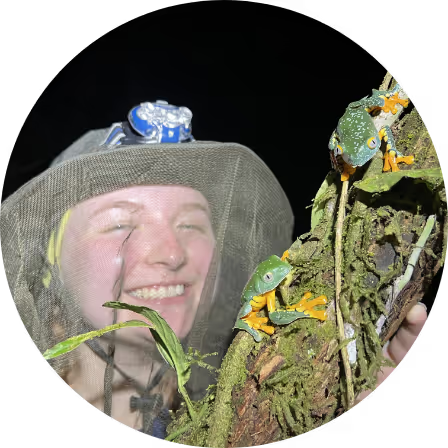
Madison Lacey
Animal Caretaker
Madison Lacey
Animal Caretaker
Madison is the animal caretaker for the Laboratory of Organismal Biology frog colony. This includes basic care for over 300 frogs of various species, this includes feeding, sexing, cleaning, and maintaining accurate records. She enjoys maintaining the health and happiness of the frogs for the research conducted in the lab. Aside from her love of herpetology, Madison loves reading, going on hikes, and watching horror movies.


